RTK vs WAAS vs PPP: what the accuracy numbers mean when you are in the seat
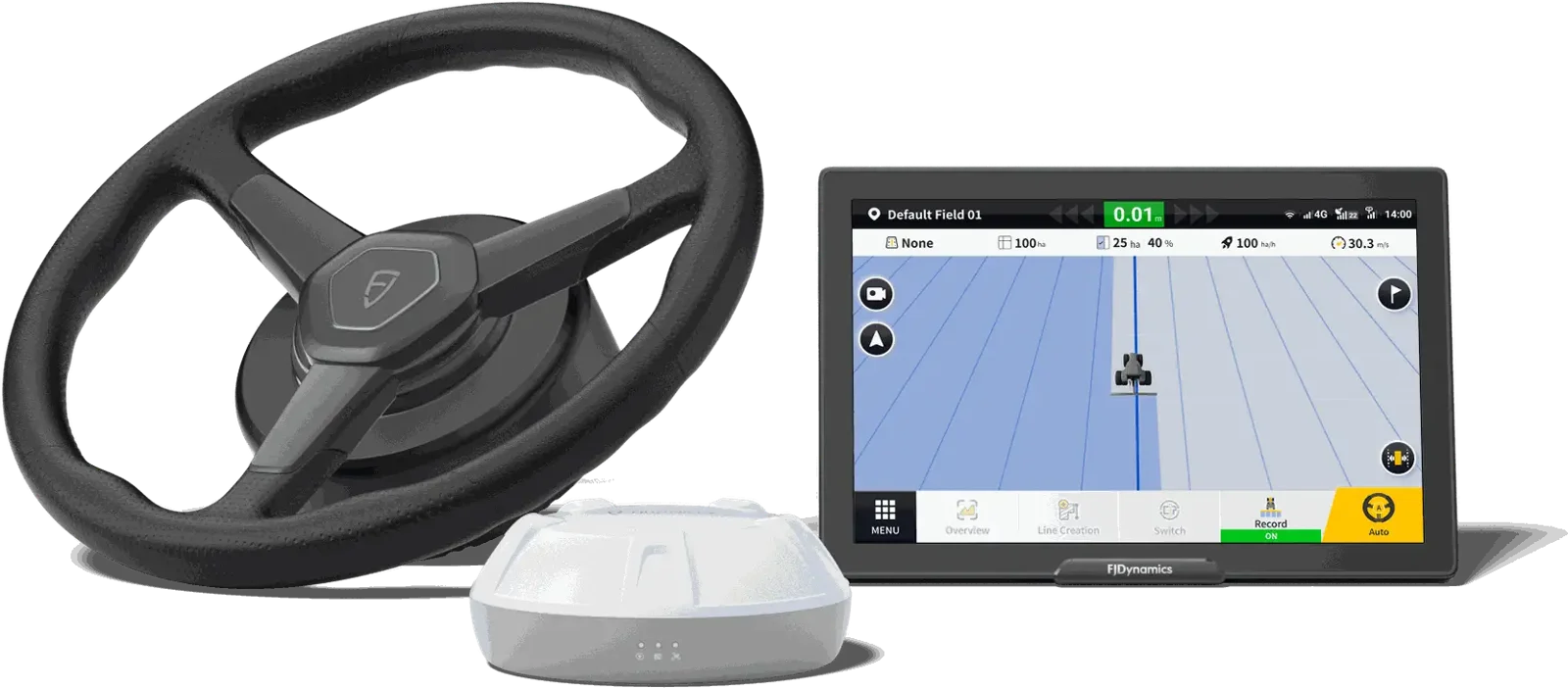
WAAS is free and gets you within a few feet of where you think you are, with a few inches of drift from one pass to the next and no memory of where last year's rows were. RTK gets you within an inch, pass after pass, and puts you back on the same line next spring. PPP sits in between: about two inches, no base station, and a wait at startup. The FJD kits run all three. Here is what the difference looks like from the seat, and which jobs each one is good enough for.
Ask what signal your farm needs Call or Text (580) 394-0089The three signals side by side
| Signal | Pass to pass | Repeatable next year? | Startup | What you need | Good enough for |
|---|---|---|---|---|---|
| WAAS (free satellite signal) | A few inches to about half a foot, drifting through the day | No. The line moves over the day and from season to season | Under a minute | Nothing. Built into the receiver | Mowing, baling, tillage, broadcast spraying, anything where inches of overlap do not cost much |
| PPP (satellite correction, Galileo) | About two inches | Mostly. Good enough for most planting; not for strip-till on old rows | Fifteen to twenty minutes to converge at every power-up | Nothing beyond the receiver | Planting and spraying where no RTK is available and a startup wait is fine |
| RTK (base station or network) | About one inch (2.5 cm) | Yes. Same line to about an inch, year after year | Under a minute with network RTK | A base station you own, or a GEODNET network subscription over cellular | Planting on last year's rows, strip-till, bedding, drip tape, sidedress, controlled traffic, anything you will come back to |
What the numbers look like from the seat
- WAAS on a 40-foot drill. You set the overlap to six inches so you never leave a strip, because the signal might be four inches left this pass and four inches right the next. Six inches on 40 feet is one and a quarter percent of your seed and fertilizer put down twice, and you still get the occasional skip. On a 1,000-acre wheat farm that is twelve acres of inputs you paid for and did not need.
- RTK on the same drill. Overlap goes to an inch. The next pass butts up against the last one every time, all night, in dust.
- WAAS in April, WAAS in June. The A-B line you saved at planting is not where the planter went. If you try to sidedress or spray between rows on it you will be on the rows somewhere in the field.
- RTK in April, RTK in June. The sprayer runs the planter's wheel tracks. The strip-till rig hits last year's strips. The bedder puts the beds back where the drip tape is.
Where RTK comes from
RTK needs a second receiver that knows exactly where it is, so it can tell yours how far off the satellites are right now. That is either a base station on your farm sending by radio, or a network base that sends the correction over cellular. GEODNET is the network we set most farmers up on: no base to buy or maintain, and the correction follows you to the rented ground. The FJD V1 is the portable base for farms that want their own. What RTK autosteer costs to run walks through every fee that can show up and which ones exist on an FJD system.
When WAAS is the right answer
Start on WAAS if the work is mowing, baling, tillage or broadcast spraying and you are not coming back to the lines. The kit is the same, so you turn RTK on later with a subscription or a base, not a new receiver. Some of our longest customers ran WAAS for a season first.
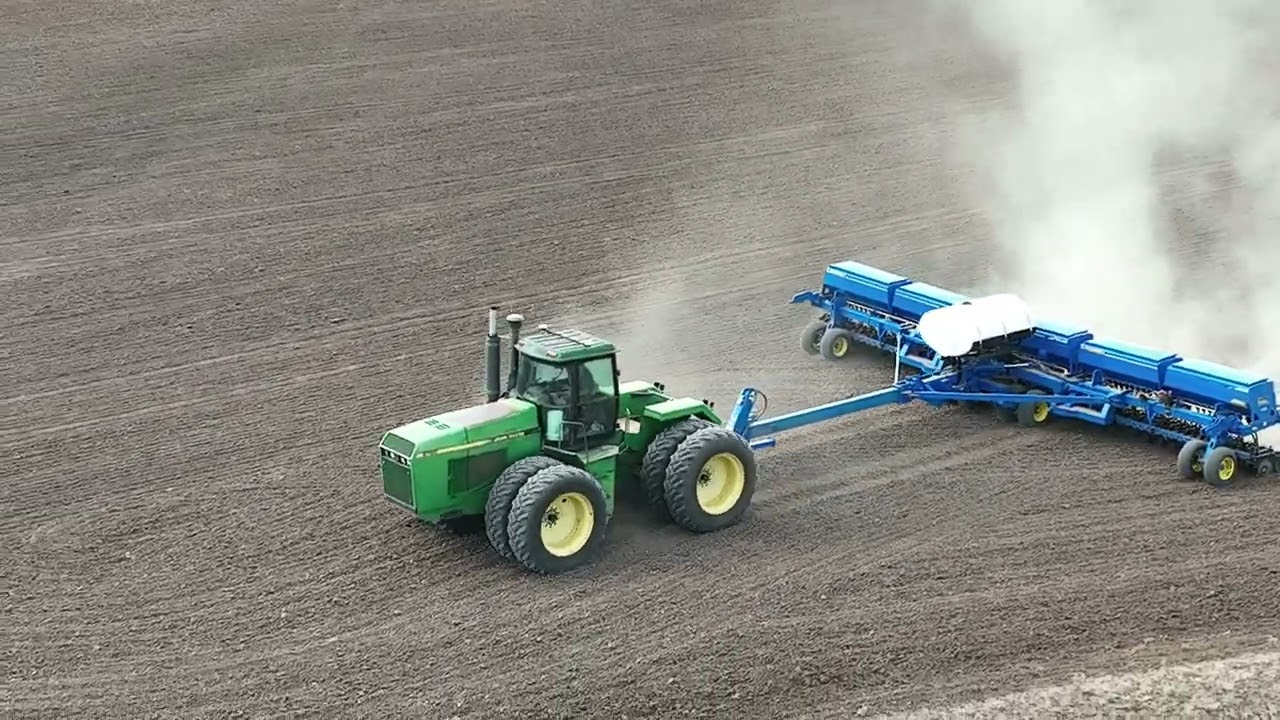
An 8760 Deere running on WAAS
Free signal, old articulated tractor, straight pass. This is what WAAS looks like when the job is tillage.
- What you will run it on first: planter, drill, sprayer, mower, combine
- Whether you will come back to the lines later in the season or next year
- Your farm location and the counties you farm, so we check network RTK coverage
- Whether you already own a base station or have a dealer RTK subscription
Common questions
What does pass-to-pass accuracy mean?
How close this pass lands to the last one over about fifteen minutes. It is the number that decides your overlap. WAAS is usually a few inches to half a foot pass to pass; RTK is about an inch.
What does repeatable mean, and why does it matter?
Whether the system can put you back on the exact same line tomorrow, next month and next year. WAAS cannot; its position drifts over the day, so the line you saved in April is somewhere else in June. RTK is repeatable to about an inch, year over year, which is what makes planting on last year's rows, strip-till and controlled traffic work.
Is WAAS good enough for anything?
Yes. Mowing, baling, tillage, broadcast spraying on pasture and anything else where a few inches of overlap does not cost you. Plenty of our customers started on WAAS and added RTK when they started planting or banding on the lines.
What is PPP?
A correction that comes straight from the satellites, no base station or cellular needed. The FJD receiver using Galileo PPP holds about two inches. The catch is startup: it takes fifteen to twenty minutes to converge every time you power up, and it drops back to WAAS accuracy while it does.
What do I need to run RTK?
A correction source. That is either a base station you own on the farm, or a network like GEODNET that sends the correction to the receiver over cellular. The FJD receiver is RTK-capable out of the box; there is no accuracy unlock to buy later.
Does weather or the sun affect it?
Solar storms do, and they hit every brand. The big one in May 2024 knocked RTK and WAAS off for a lot of farmers for part of a day. The fix is a close base station and patience; it comes back.
Can I switch between them?
Yes. Signal source is a menu setting on the FJD display. Run WAAS on the mower and switch to RTK on the planter with the same kit.
More on auto steer
Autosteer for Tractors · Is my tractor steer-ready? · Older tractors · Articulated 4WDs · Combines · Sprayers · Swathers · RTK vs WAAS · What RTK costs to run · FJD AT2 vs Wheelman · FJD AT2 · AT2 Max · AS2 steer-ready · AH2 hydraulic · GEODNET RTK · John Deere · Case IH · New Holland · Kubota · Massey Ferguson · Reviews
Published 10/13/2026 by Deep Sand Tech, Lone Wolf, Oklahoma. Written from our own installs and support calls, not from a brochure.